

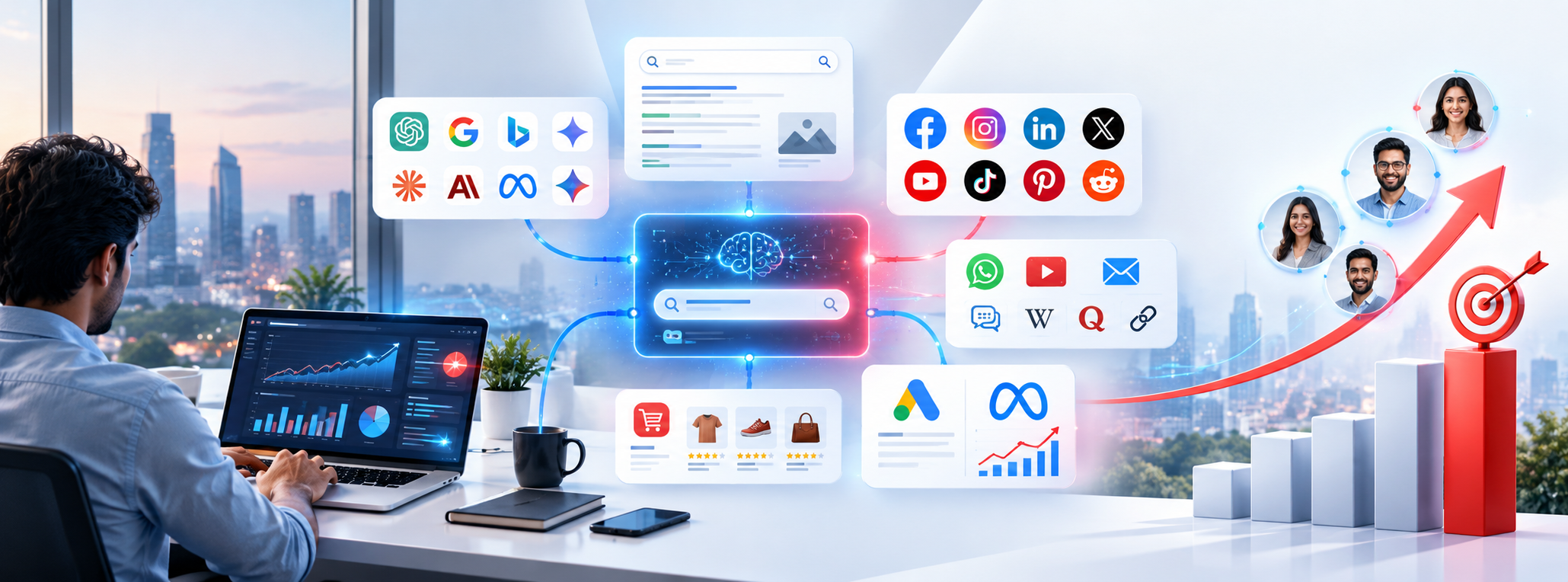
The digital landscape is changing rapidly. Businesses no longer compete only for the top positions on Google. They must also build visibility across AI-powered search platforms , social media networks, online communities and paid advertising channels.
In 2026, having a website is just the beginning. Businesses need a comprehensive SEO and digital marketing strategy that attracts the right audience, builds credibility and turns online attention into meaningful business opportunities.
From Answer Engine Optimization (AEO) and Generative Engine Optimization (GEO) to traditional SEO, social media marketing and pay-per-click advertising, every channel plays a different role in customer acquisition.
The goal is not simply to generate more clicks. It is to connect with people who need your products or services and make it easier for them to become customers.
1. AEO: Answer Engine Optimization for AI Search
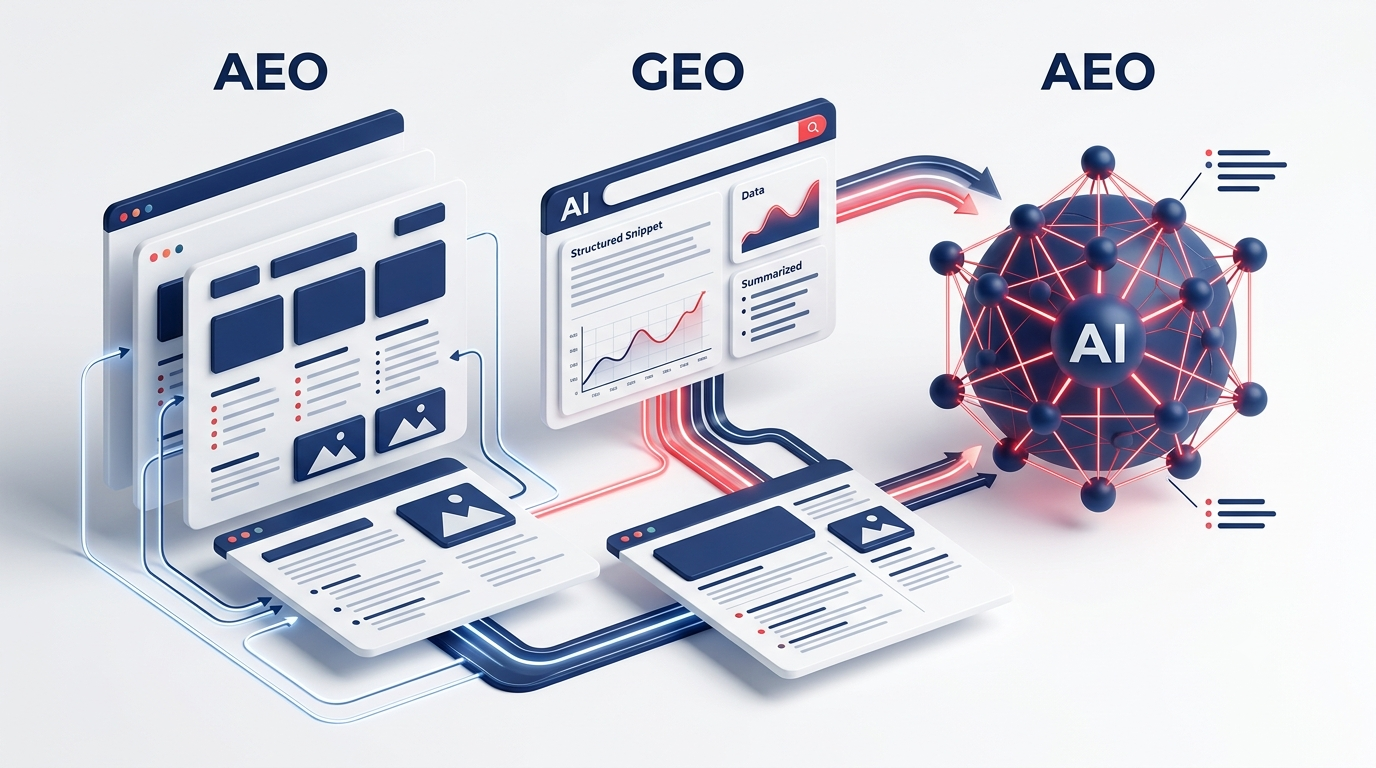
Answer Engine Optimization (AEO) focuses on making website content easy for search engines and AI-powered answer systems to understand and retrieve when answering user questions.
People increasingly ask direct questions through tools such as ChatGPT, Google Gemini, Microsoft Copilot, Perplexity, Claude AI, Meta AI and You.com. Businesses can improve their chances of being discovered by providing accurate, useful and well-structured information.
An effective AEO strategy includes clear headings, concise answers, relevant FAQs, descriptive page titles and structured data where appropriate.
For example, a digital marketing agency can publish detailed answers to questions such as “How does local SEO help small businesses?” or “What is the difference between SEO and AEO?”
Businesses should also maintain consistent company information and demonstrate genuine expertise through original content.
The benefit: AEO helps businesses make their information more accessible to answer engines and potential customers. However, inclusion in AI-generated answers cannot be guaranteed.
2. GEO: Generative Engine Optimization for AI Visibility
Generative Engine Optimization (GEO) focuses on improving a brand’s discoverability in AI-generated search experiences and conversational answers.
While traditional SEO aims to improve visibility in search results, GEO also considers how AI systems interpret brand information, evaluate sources and reference useful content.
Businesses should develop authoritative content, publish original insights, maintain accurate business details and earn relevant mentions from credible websites.
GEO opportunities extend across platforms and experiences associated with Google Search AI, Microsoft Bing AI, DuckDuckGo AI and Substack publishing and discovery.
A company can strengthen its digital presence by creating comprehensive guides, supporting claims with reliable evidence and explaining its services consistently across its website and other trusted sources.
The benefit: GEO supports brand discovery in evolving search environments while reinforcing the quality and authority of a business’s online information.
3. SEO: Build Sustainable Search Engine Visibility
Search Engine Optimization (SEO) helps websites attract relevant organic traffic by improving their technical performance, content relevance and authority.
A complete SEO strategy includes several important services:
-
On-Page SEO Optimizing titles, headings, internal links, content and page structure.
-
Off-Page SEO Building authority through relevant mentions, digital PR and quality backlinks.
-
Content SEO Creating useful articles, landing pages and resources around search intent.
-
E-Commerce SEO Improving product pages, category pages and product discovery for online stores.
-
Local SEO Helping businesses reach customers searching for nearby products and services.
-
Multilingual SEO Making content accessible to audiences searching in different languages and regions.
Technical improvements, mobile usability, crawlability and page experience also contribute to a strong SEO foundation.
For example, a local service provider can optimize its service pages and business profile to reach people searching for its services in a particular area. An online retailer can improve product descriptions and category navigation to help shoppers find relevant products.
The benefit: SEO can build long-term organic visibility, attract qualified visitors and support sustainable lead generation when combined with useful content and a good website experience.
4. SMM: Social Media Marketing That Builds Relationships
Social Media Marketing (SMM) allows businesses to reach audiences, share useful content, communicate with customers and strengthen brand recognition.
Each platform serves a different purpose, so businesses should select channels based on their target audience and goals.
Important SMM services include:
-
Facebook Marketing Community engagement, business promotion and audience reach.
-
Instagram Marketing Reels, visual storytelling and product discovery.
-
LinkedIn Marketing Professional networking, B2B visibility and lead generation.
-
X (Twitter) Marketing Timely updates, conversations and industry engagement.
-
YouTube Marketing Educational videos, demonstrations and long-form content.
-
TikTok Marketing Short-form videos and creative brand discovery.
-
Pinterest Marketing Visual discovery, inspiration and product-related content.
-
Reddit Marketing Relevant community participation and genuine discussions.
-
Google My Business Marketing Optimizing a Google Business Profile for local discovery.
-
Bing Map Promotion Improving business visibility through relevant Bing Maps information.
A successful social media strategy combines consistent publishing, audience interaction, platform-appropriate creative content and performance measurement.
Businesses should prioritize useful information over constant promotional posts. Tutorials, customer questions, product demonstrations and behind-the-scenes content can help build trust.
The benefit: SMM creates more opportunities for customers to discover a brand, engage with its content and explore its offerings.
5. Digital Marketing: Connect Every Customer Touchpoint
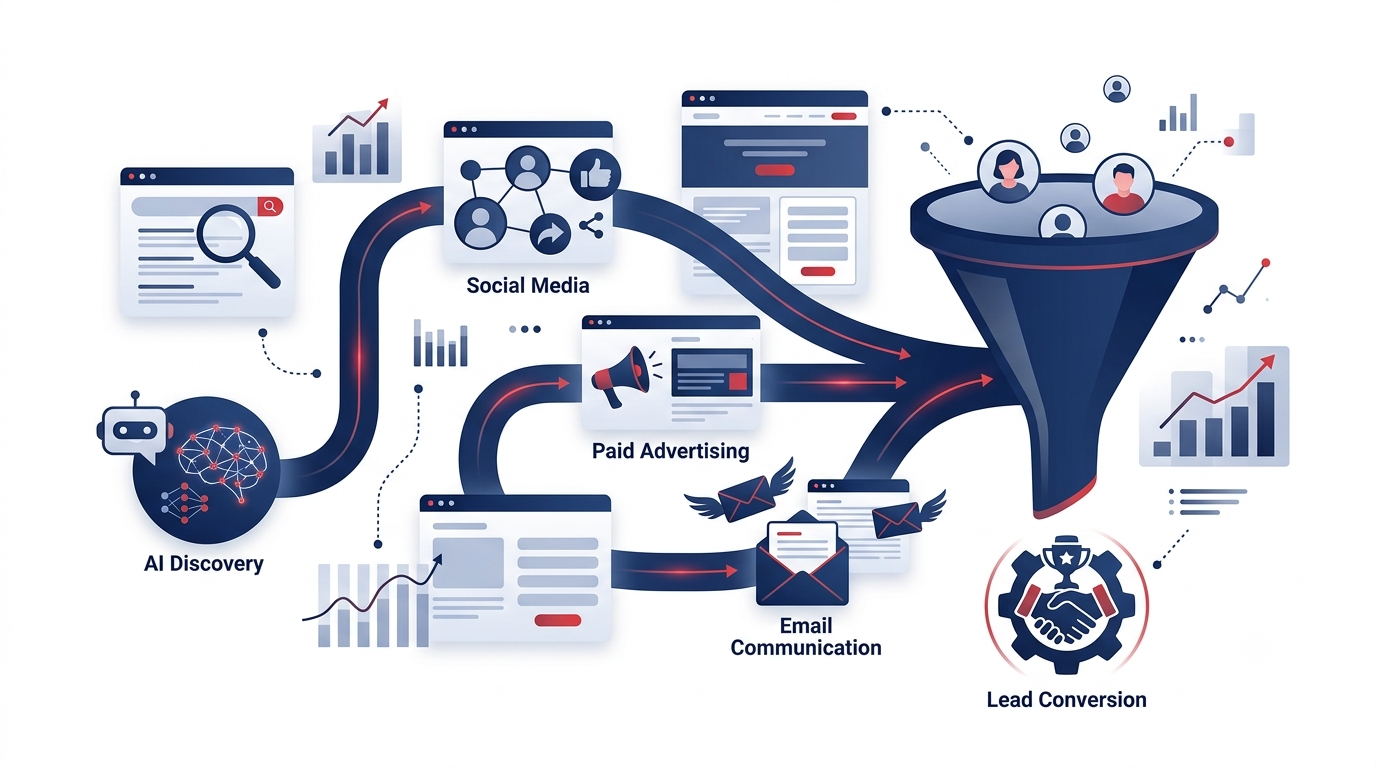
Digital marketing brings multiple online channels together to create a consistent customer journey, from initial discovery to enquiry, purchase and retention.
Beyond SEO and social media, businesses can use several supporting services:
-
WhatsApp Marketing Customer communication, enquiries, updates and consent-based promotional messages.
-
Video Marketing Explaining services, demonstrating products and communicating brand value.
-
Reputation Management Monitoring feedback, responding professionally to reviews and strengthening customer trust.
-
Forum and Microblogging Marketing Participating in relevant discussions and sharing useful insights.
-
Wikipedia Services Supporting accurate, independently sourced encyclopedic information when a business meets Wikipedia’s notability and editorial requirements.
-
Quora Marketing Answering relevant questions with informative, non-spammy responses.
-
Blog Posting Publishing educational content that addresses customer needs and search intent.
-
Link Submission Submitting appropriate website resources to relevant directories or platforms without relying on low-quality link schemes.
-
Email Marketing Sending useful newsletters, lead-nurturing messages and customer updates.
-
Classified Listing Promoting eligible products or services through relevant classified platforms.
These activities work best when they support a clear marketing objective. For example, a blog post can attract organic traffic, a relevant social media post can distribute it, and an email campaign can help interested subscribers explore a service.
The benefit: Integrated digital marketing helps businesses maintain consistent messaging, reach customers through multiple channels and measure performance across the customer journey.
6. PPC: Reach High-Intent Customers Through Paid Advertising
Pay-Per-Click (PPC) advertising allows businesses to promote their offerings through paid placements and pay according to the advertising model used.
Two important services are Google Ads and Meta Ads.
Google Ads can help businesses reach people searching for specific products or services. Campaigns may include search, shopping, display or video advertising, depending on eligibility and objectives.
Meta Ads can help businesses reach audiences across Facebook and Instagram through audience targeting, creative campaigns and retargeting where appropriate.
An effective PPC strategy begins with a defined audience, clear campaign objectives, relevant ad copy and a dedicated landing page.
Businesses should track meaningful metrics such as qualified leads, conversion rate, cost per acquisition and return on ad spend where applicable.
For example, a service business can direct relevant search traffic to a landing page with a clear service description, enquiry form and contact options.
The benefit: PPC can generate visibility and enquiries more quickly than waiting for organic rankings to develop, but results depend on budget, targeting, competition, landing-page quality and campaign management.
7. How AEO, GEO, SEO, SMM, Digital Marketing and PPC Work Together
These services are most effective when they complement one another rather than operate as disconnected activities.
Consider a business launching a new service.
First, SEO and content marketing help customers discover useful information through organic search. AEO and GEO support discoverability in AI-assisted search experiences. SMM distributes content and encourages engagement.
Next, Google Ads or Meta Ads can reach relevant audiences through paid campaigns. Email and WhatsApp marketing, with appropriate consent, can support follow-ups. Reputation management helps the business respond to feedback, while analytics reveal which channels generate valuable enquiries.
The process should be measured from discovery to conversion instead of focusing on traffic alone.
Useful performance indicators include organic clicks, relevant AI referrals where measurable, qualified leads, conversion rates, cost per lead and customer acquisition cost.
This integrated approach helps businesses understand how their marketing activities contribute to actual commercial goals.
8. A Practical 30-Day Digital Growth Plan
Businesses can begin improving their digital presence with a structured first month.
Week 1: Audit and research
Review website performance, technical SEO, existing content, target keywords, business profiles and competitor visibility. Define the main audience and conversion goals.
Week 2: Improve the foundation
Update important service pages, strengthen internal linking, improve mobile usability and publish clear answers to customer questions. Review AEO, GEO and multilingual opportunities where relevant.
Week 3: Expand distribution
Develop a realistic social media calendar, publish useful content and test suitable paid campaigns. Improve email follow-up and customer enquiry processes.
Week 4: Measure and refine
Review search performance, engagement, qualified leads and campaign costs. Identify the channels that show promising results and prioritize improvements based on evidence.
The first 30 days should establish a foundation, not promise guaranteed rankings or sales. Sustainable growth requires continued testing, useful content and ongoing optimization.
Frequently Asked Questions
1. What is the difference between AEO, GEO and SEO?
SEO improves organic search visibility. AEO focuses on making content useful for answer-oriented search experiences, while GEO focuses on discoverability in generative AI search experiences. These approaches overlap and can complement one another.
2. Why is AI search optimization important in 2026?
AI-assisted search changes how people discover information, compare providers and explore solutions. Creating accurate, helpful and well-structured content can support visibility across traditional and AI-powered search experiences.
3. How long does SEO take to show results?
SEO timelines vary according to competition, website condition, content quality and authority. Meaningful improvements can take several months, and results are not guaranteed.
4. Is social media marketing better than SEO?
Neither is universally better. SEO can support ongoing organic discovery, while SMM helps businesses distribute content, interact with audiences and build brand awareness. The right balance depends on business objectives.
5. What is the difference between Google Ads and Meta Ads?
Google Ads can capture demand from people actively searching for relevant products and services. Meta Ads can help businesses reach and engage audiences across Facebook and Instagram. Both require appropriate targeting, creative content and conversion tracking.
6. Can small businesses use all these digital marketing services?
Small businesses can use them, but they do not need to implement every service immediately. Starting with a well-optimized website, relevant local SEO, useful content and one or two suitable marketing channels is often more practical.
7. How can businesses measure digital marketing success?
Measure outcomes such as qualified enquiries, conversion rates, cost per lead, customer acquisition cost and revenue contribution. Website visits and social media engagement are useful supporting indicators but should not be the only success measures.
8. How do I choose the right digital marketing agency?
Look for relevant experience, transparent reporting, a clear strategy, realistic expectations and measurable objectives. Ask how the agency will connect its activities to your business outcomes and how it will report progress.
Conclusion: Turn Online Visibility into Meaningful Growth
In 2026, successful digital marketing requires more than generating clicks. Businesses need to be discoverable, credible and useful wherever their customers search for information.
AEO, GEO, SEO, SMM, digital marketing and PPC each contribute to a different part of the customer journey. When supported by valuable content, consistent brand information, a good website experience and reliable measurement, they can work together to attract qualified audiences and create opportunities for growth.
The right strategy depends on your business model, target market, competition and goals. Start with a strong foundation, select the most relevant services and improve your approach using measurable results.
Ready to improve your online visibility and generate more qualified enquiries? Explore SEOAD’s SEO, AI search optimization and digital marketing services to identify a strategy aligned with your business objectives.