

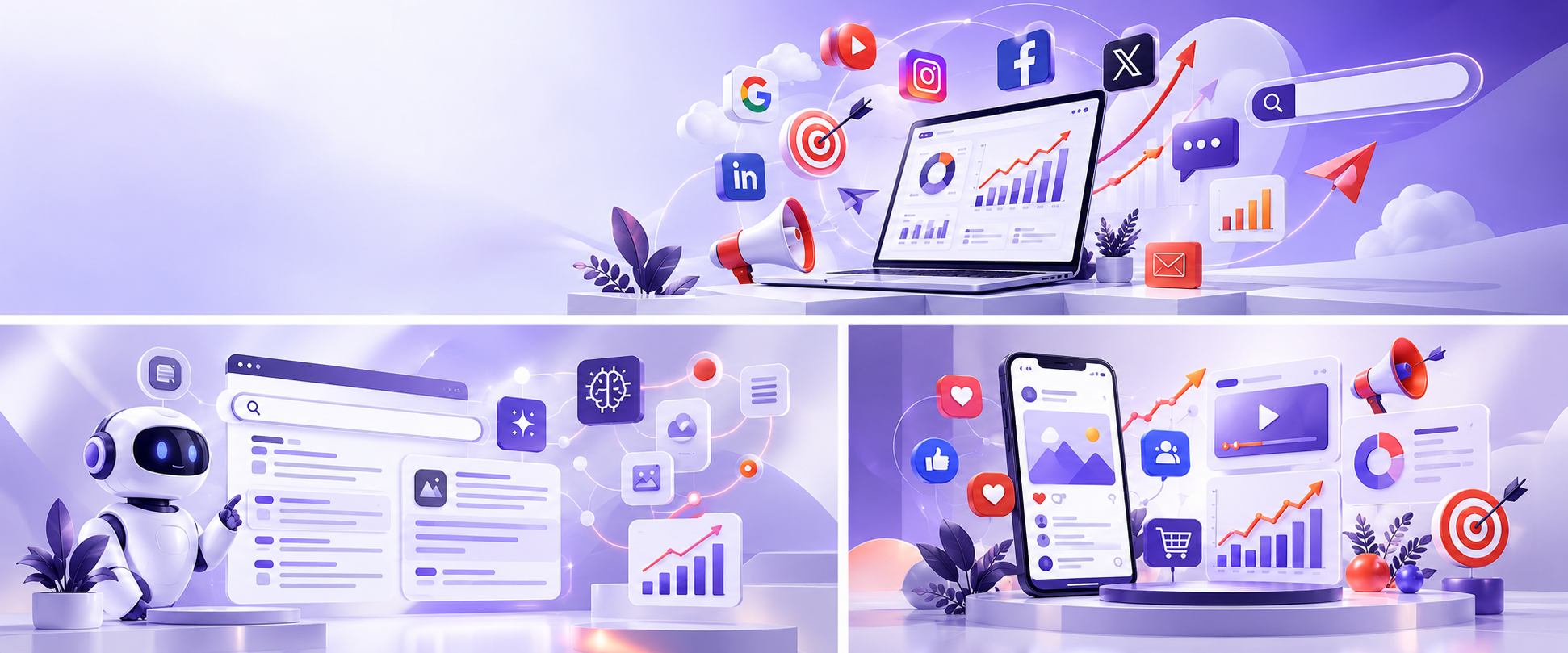
The way people discover businesses online is changing rapidly. Customers no longer rely only on traditional search engines to find products and services. They also use AI assistants, social media platforms, online communities, and paid advertisements to research options and make purchasing decisions.
For businesses, this creates an opportunity to reach the right audience across multiple digital channels. A well-planned digital marketing strategy helps improve online visibility, attract relevant visitors, build brand awareness, and generate qualified leads.
At SEOAD, digital marketing encompasses multiple services, including Answer Engine Optimization (AEO), Generative Engine Optimization (GEO), Search Engine Optimization (SEO), Social Media Marketing (SMM), Digital Marketing (DM), and Pay-Per-Click Advertising (PPC).
Understanding how these services work together can help businesses choose the right strategies for sustainable online growth.
What Is Digital Marketing?
Digital marketing is the process of promoting a business, product, or service through online channels. It includes organic search optimization, paid advertising, social media campaigns, content creation, online reputation management, and other activities designed to connect businesses with potential customers.
Unlike traditional marketing, digital marketing provides opportunities to measure campaign performance through metrics such as website traffic, engagement, leads, conversions, and advertising costs.
An effective digital marketing strategy combines the right channels, useful content, audience research, and continuous performance analysis.
1. Answer Engine Optimization (AEO)
Answer Engine Optimization focuses on making website content useful and accessible to systems that provide direct answers to user questions. These experiences include AI assistants, conversational search tools, and answer-focused search features.
Instead of targeting only traditional keyword rankings, AEO emphasizes clear answers, relevant information, structured content, and credibility.
AEO services include
-
Optimizing content for question-based searches.
-
Creating informative FAQs and concise explanations.
-
Organizing content with descriptive headings.
-
Providing accurate, well-supported answers.
-
Improving content clarity and accessibility.
-
Maintaining relevant structured data where appropriate.
For example, a customer searching for “How can a small business improve online visibility?” may encounter direct answers through an AI assistant or a search engine's answer-focused features.
Businesses that publish helpful, trustworthy information can improve their chances of being useful sources for these experiences. However, inclusion in AI-generated answers is not guaranteed.
2. Generative Engine Optimization (GEO)
Generative Engine Optimization focuses on improving how a brand and its content can be understood, discovered, and potentially referenced by generative AI search experiences.
As people increasingly ask AI tools for recommendations, comparisons, and explanations, businesses have new opportunities to communicate their expertise and make their information accessible.
GEO services include
-
Creating authoritative, clearly organized website content.
-
Publishing original insights and useful industry information.
-
Maintaining consistent brand information across relevant sources.
-
Supporting factual claims with credible references.
-
Improving content structure and contextual relevance.
-
Monitoring brand visibility in relevant AI search experiences.
For instance, a software company may publish detailed product comparisons, use-case guides, and practical explanations that help potential customers understand its solutions.
GEO complements traditional SEO rather than replacing it. Clear information, credible content, accessible pages, and a recognizable brand remain important foundations.
3. Search Engine Optimization (SEO)
Search Engine Optimization helps improve a website's visibility in organic search results. It focuses on making pages relevant to user searches while ensuring search engines can discover, understand, and index the website.
SEO is particularly valuable for businesses seeking sustainable organic traffic without paying for every individual click.
SEO services include
Technical SEOImproving crawlability, indexing, website performance, mobile usability, and URL structure.
On-Page SEO Optimizing titles, headings, content, internal links, and other page elements.
Off-Page SEO Building credibility through relevant mentions, editorial links, and legitimate digital PR activities.
Content SEO Developing useful content that matches search intent and answers customer questions.
Local SEO Improving visibility for relevant local searches through accurate business information, local landing pages, and eligible business profile optimization.
E-Commerce SEO Optimizing product pages, category pages, internal navigation, and product information.
Multilingual SEO Helping websites serve audiences in different languages through appropriate language targeting and URL structures.
A comprehensive SEO strategy combines these activities according to a business's objectives, competition, website condition, and target audience.
4. Social Media Marketing (SMM)
Social Media Marketing helps businesses connect with audiences through social platforms. It supports brand awareness, community engagement, content distribution, customer communication, and lead generation.
The most effective platform depends on the target audience, industry, content format, and marketing objectives.
Social media services include
-
Facebook Marketing Building communities, publishing content, and supporting audience engagement.
-
Instagram Marketing Using visual content, Reels, Stories, and creator collaborations.
-
LinkedIn Marketing Connecting with professionals and supporting B2B brand awareness.
-
X Marketing Participating in relevant conversations and sharing timely updates.
-
YouTube Marketing Publishing educational videos, demonstrations, and brand content.
-
TikTok Marketing Creating short-form content for audiences where the platform is available and relevant.
-
Pinterest Marketing Sharing visual ideas and driving discovery for suitable niches.
-
Reddit Marketing Participating transparently in relevant communities and providing useful contributions.
Other activities can include Google Business Profile management and Bing Maps promotion where applicable.
Businesses should select platforms strategically rather than attempting to maintain an active presence on every network.
5. Digital Marketing and Online Brand Promotion
Digital marketing brings different online channels together into a coordinated strategy. In addition to SEO and social media, businesses may benefit from content distribution, email campaigns, online reputation management, and targeted promotional activities.
Digital marketing services include
WhatsApp Marketing Using appropriate messaging and customer communication to share updates, answer enquiries, and support customer relationships with consent.
Video Marketing Explaining products, demonstrating services, and communicating brand value through video.
Online Reputation Management Monitoring customer feedback, responding professionally to reviews, and improving trust through genuine customer experiences.
Forum and Community Marketing Contributing useful information to relevant online discussions without spamming communities.
Blog Publishing Sharing educational articles, industry insights, and practical solutions to attract relevant audiences.
Email Marketing Sending relevant newsletters, product updates, and campaign messages to appropriately collected subscriber lists.
Classified Listings and Link Outreach Using relevant directories and legitimate outreach opportunities to improve discovery and referral traffic.
Quora Marketing Answering relevant questions with helpful information and appropriate references to a business's resources.
Every activity should support a clear goal, whether that is increasing awareness, generating leads, strengthening customer relationships, or encouraging conversions.
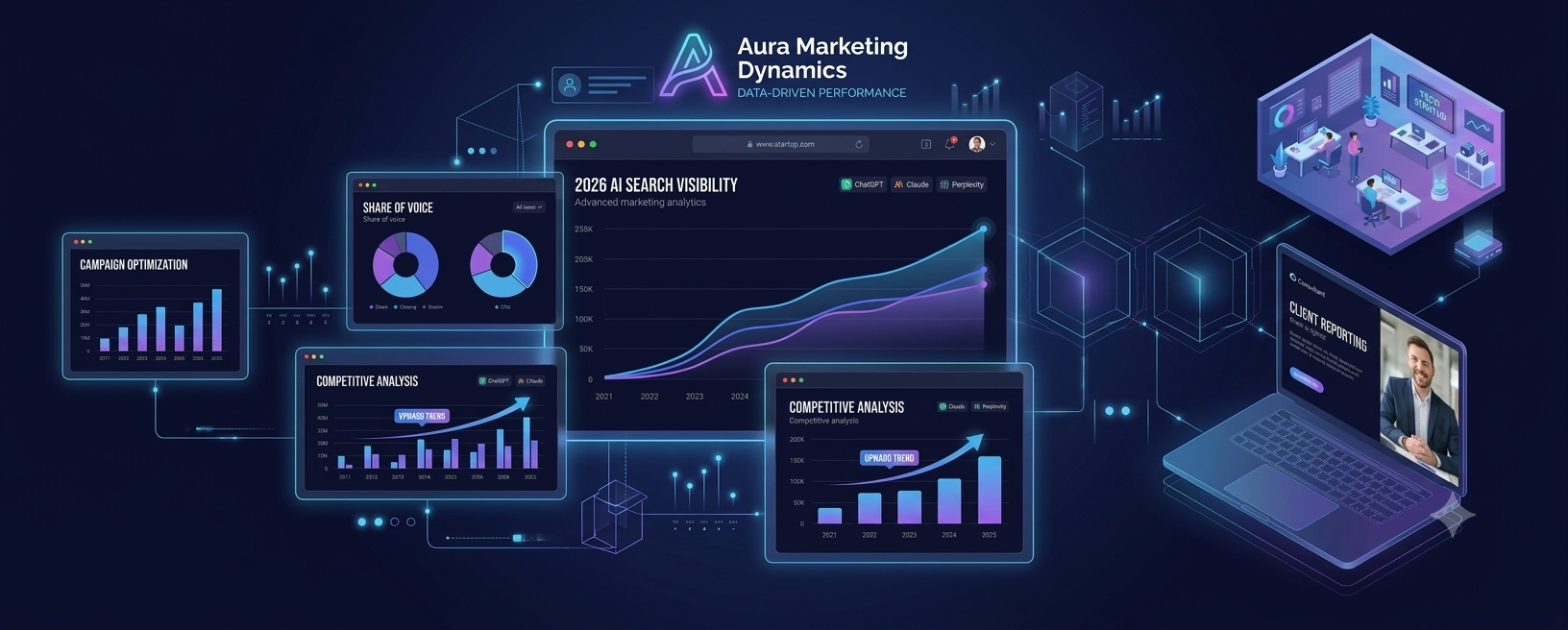
6. Pay-Per-Click Advertising (PPC)
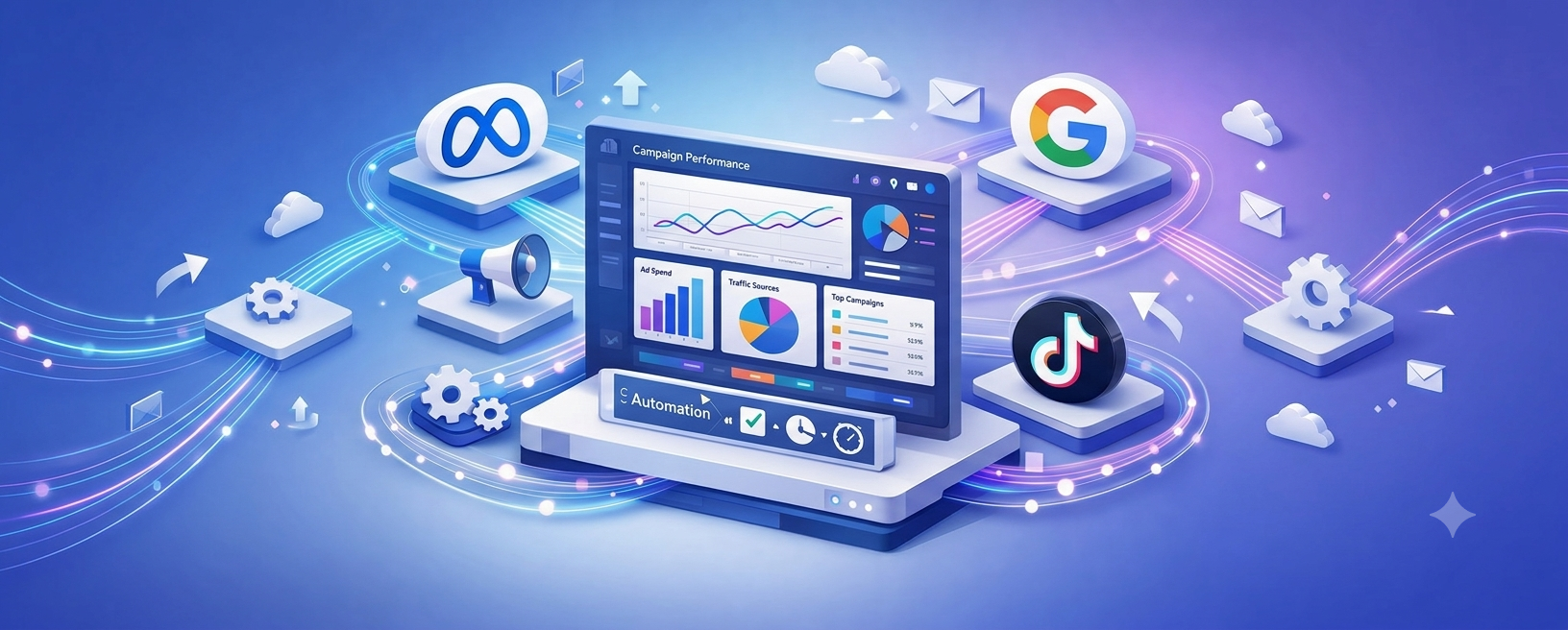
Pay-Per-Click advertising allows businesses to promote products and services through paid placements and pay for eligible clicks according to the advertising platform's billing model.
PPC can help businesses reach relevant audiences while testing campaign messages, targeting options, and landing pages.
PPC services include
Google Ads: Reaching potential customers through eligible search, display, video, and other Google advertising placements.
Meta Ads: Running paid campaigns across Facebook and Instagram placements to support awareness, engagement, leads, and sales.
A well-managed PPC campaign involves more than launching advertisements. It requires audience research, keyword selection where applicable, compelling ad copy, conversion tracking, landing-page optimization, budget management, and regular performance analysis.
Important metrics include click-through rate, cost per click, conversion rate, cost per lead, and return on ad spend where revenue tracking is reliable.
Unlike organic SEO, PPC generally requires ongoing advertising expenditure to maintain paid exposure. The best results come from matching campaign objectives with suitable audiences and measuring business outcomes.
How Do These Digital Marketing Services Work Together?
Each digital marketing service serves a different purpose, but the channels become more effective when they support a shared strategy.
For example, a business launching a new product could use SEO to build long-term organic visibility, AEO and GEO to improve the accessibility and usefulness of its information in AI-driven discovery, and social media to introduce the product to relevant audiences.
PPC can help test promotional messages and generate immediate campaign exposure. Video marketing can demonstrate product benefits, while email marketing can nurture interested prospects.
A coordinated strategy allows businesses to connect discovery, engagement, and conversion instead of treating every channel as a separate activity.
How to Choose the Right Digital Marketing Strategy
The right combination depends on your business goals, audience, budget, competition, and timeline.
-
For long-term organic traffic: Prioritize SEO and helpful content.
-
For AI-driven discovery: Develop clear, credible content that supports AEO and GEO.
-
For brand awareness: Consider social media, video marketing, and relevant paid campaigns.
-
For lead generation: Combine suitable landing pages, targeted advertising, and conversion tracking.
-
For local customers: Focus on Local SEO, accurate business information, and relevant local content.
-
For customer retention: Consider email marketing and consent-based customer communication.
Before investing in multiple channels, define measurable objectives and establish a baseline for traffic, enquiries, conversions, and marketing expenditure.
Frequently Asked Questions (FAQs) About Digital Marketing
1. What are digital marketing services?
Digital marketing services help businesses promote their products and services online. These include SEO, AEO, GEO, social media marketing, PPC advertising, content marketing, email marketing, and online reputation management.
2. What is the difference between SEO, AEO, and GEO?
SEO focuses on improving visibility in traditional search engine results. AEO focuses on providing clear, useful answers to user questions, while GEO focuses on improving how content and brands may be discovered or referenced by generative AI search experiences.
3. Why is digital marketing important for businesses in 2026?
Digital marketing helps businesses reach relevant audiences, build brand awareness, generate leads, and measure campaign performance. It also helps companies adapt to changing customer discovery habits across search engines, AI tools, social media, and advertising platforms.
4. Which digital marketing service is best for my business?
The right service depends on your business goals. SEO can support long-term organic visibility, Local SEO helps businesses reach relevant local audiences, social media marketing builds engagement, and PPC can generate targeted paid traffic. A combination of services may be more effective for businesses with multiple objectives.
5. How long does SEO take to show results?
SEO results vary depending on website condition, competition, content quality, industry, and the work involved. Some improvements may become visible within weeks, while meaningful organic growth often takes several months. Rankings and traffic cannot be guaranteed.
6. What is Pay-Per-Click (PPC) advertising?
PPC advertising is a digital advertising model in which advertisers generally pay when someone clicks their advertisement. Platforms such as Google Ads and Meta Ads allow businesses to target relevant audiences, promote offers, and measure campaign performance.
7. What is the difference between SEO and PPC?
SEO focuses on earning organic search visibility through relevant content and website optimization. PPC uses paid advertising placements to reach targeted audiences. SEO can support long-term organic growth, while PPC can provide campaign exposure as long as the ads are eligible and adequately funded.
8. How does social media marketing help businesses?
Social media marketing helps businesses increase brand awareness, share content, communicate with customers, build communities, and generate leads. Platforms such as Facebook, Instagram, LinkedIn, and YouTube offer different opportunities depending on the audience and business objectives.
9. Can digital marketing help small businesses?
Yes. Small businesses can use Local SEO, targeted advertising, social media content, email marketing, and useful website content to reach potential customers. Starting with a focused strategy and measurable goals can help businesses use their marketing budgets more effectively.
10. What is the role of content marketing in SEO?
Content marketing helps businesses publish useful articles, guides, landing pages, and other resources that address customer questions. Relevant, well-organized content supports SEO by helping search engines and users understand a website's expertise and purpose.
11. How much does digital marketing cost?
Digital marketing costs depend on the services selected, campaign scope, competition, advertising budget, and business goals. SEO, content creation, social media management, and paid advertising may have different pricing structures. Businesses should evaluate costs alongside measurable outcomes such as qualified leads and conversions.
12. How can I measure digital marketing performance?
Businesses can track website traffic, search impressions, clicks, keyword visibility, social engagement, qualified leads, conversion rates, cost per lead, and return on ad spend. Tools such as Google Analytics and Google Search Console can help evaluate performance and identify opportunities for improvement.
13. What is the difference between AEO and GEO?
AEO emphasizes creating clear, relevant answers that can serve answer-focused search experiences. GEO emphasizes making information and brand expertise understandable and potentially citable in generative AI responses. The two approaches overlap and both benefit from accurate, useful, well-structured content.
14. Why should businesses choose an integrated digital marketing strategy?
An integrated strategy connects SEO, AI search optimization, social media, content marketing, and paid advertising around shared business goals. This helps maintain consistent messaging, reach audiences across different channels, and evaluate which activities contribute to business growth.
15. How can SEOAD help improve my online presence?
SEOAD offers digital marketing services across areas such as SEO, AEO, GEO, social media marketing, and PPC. Businesses can explore the available services to identify suitable strategies for improving online discoverability, audience engagement, and lead generation.
Conclusion
Digital marketing in 2026 extends beyond traditional search optimization. Businesses can build a stronger online presence by combining SEO, AEO, GEO, social media marketing, content development, reputation management, and PPC according to their specific goals.
The key is to understand how customers discover information, choose relevant channels, publish valuable content, and measure results consistently.
With a coordinated digital marketing strategy, businesses can improve discoverability, build stronger customer relationships, and create more opportunities for sustainable growth.
Ready to strengthen your online presence?
Explore SEOAD to discover digital marketing services that can support your business's visibility, audience engagement, and growth objectives.